
Service robots are evil job-destroying machines!
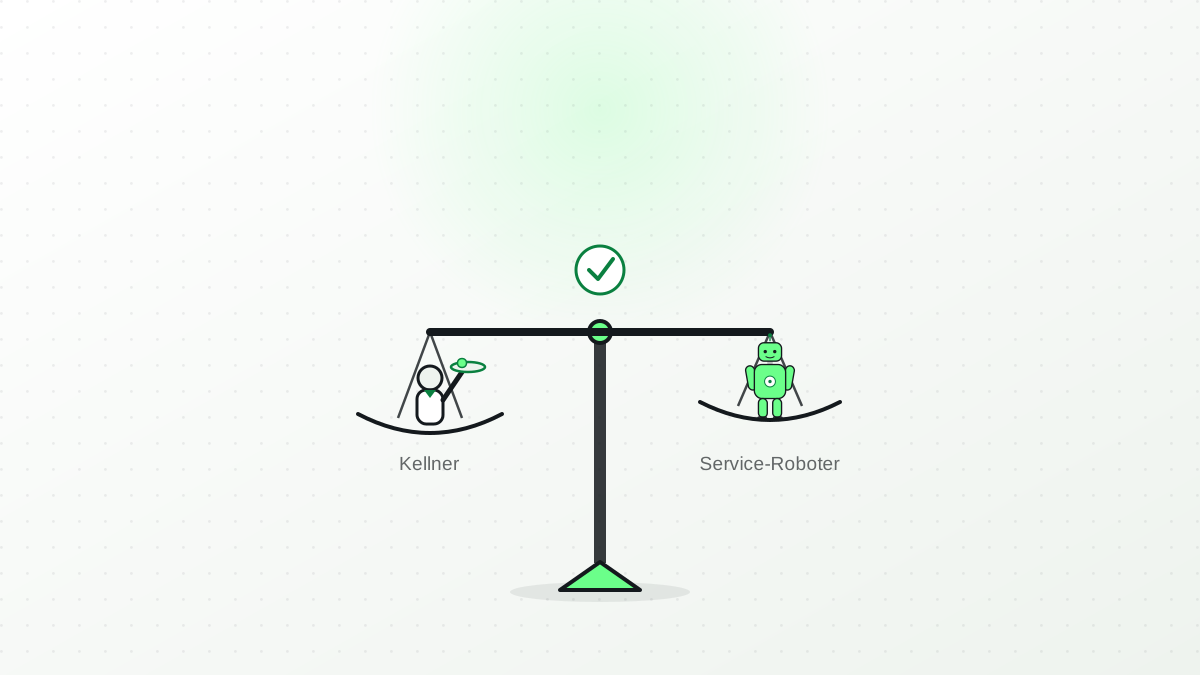
First, a comparison in numbers*: waiter vs. service robot
| Avg. price of a service robot, per day in euros | €12.73 / day |
| Average annual salary of a waiter, in euros | €24,000 |
Waiter vs. service robot
| Hourly cost of the service robot (at 8 hours of use per day) | €1.59 per hour |
| Hourly wage of a waiter (see statutory minimum wage in Germany 2024) | €12.41 per hour |
| Maximum load of the service robot, in kilograms | 40 kg |
| Maximum load of a waiter with a tray, in kilograms | 10 kg |
| Average daily operating time of the T10, in hours | 8 hours |
| Average daily working time of a waiter, in hours | 8 hours |
| Avg. walking speed of a waiter without dropping a plate, per day, in m/s | 0.42 m/s |
| Avg. walking speed of the T10 without dropping a plate, per day, in m/s | 0.42 m/s |
| Maximum speed of a waiter in m/s | Unknown |
| Maximum speed of a service robot in m/s | 1.0 m/s |
| Error tolerance rate for the T10's orders, in percent | 0.5% |
| Error tolerance rate for a waiter's orders, in percent | 2% (estimated) |
| Cost of maintenance and service incl. all wear parts for a service robot per year, in euros | €1,188 |
| Average annual sick-leave costs of a waiter, in euros | €1,200 |
| Avg. learning time of the T10 to define and optimise service routes, in hours | 2 hours |
| Avg. training time of a waiter, in months | 1 month (estimated) |
| Approximate number of languages a service robot can support | 50 languages / 16 dialects |
| Average number of languages a waiter speaks | 1.5 languages |
| Time a waiter needs to memorise the menu, in hours | 2 hours |
| Time a service robot needs for this, incl. nutritional and allergen information, in seconds | 0.25 seconds |
| Average "computing time" of the service robot during which it is idle, per shift | 2 minutes |
| Average break time of a waiter per shift | 60 minutes |
| Number of toilet visits of a waiter, per day | 3 visits |
| Number of toilet visits of a service robot, per day | 0 visits |
| Average electricity cost of a service robot per day, in euros | €0.58/day |
| Average electricity cost of a waiter, per day in euros | €0/day |
I have now been working in robotics for over 20 years, and it feels as though nowhere else does this sceptical attitude towards robots hold on as firmly as in Germany.
Perhaps some baby boomers still remember the widespread introduction of industrial robots. Back then, too, the outcry was great. But let's be honest: had we not taken that step, we would have long ceased to be competitive today.
Even now, 20 years later, it falls far too short to speak of "job-destroying machines", and yet I encounter such people almost every day. It feels like déjà vu; almost every day a groundhog greets me!
It's a shame that many still do not grasp the potential to be unlocked in service robotics. Especially in Germany, the focus should now be on relieving staff of repetitive and physically demanding tasks.
How long the sceptics among you want to persist in this defensive stance is, of course, up to each individual.
For us, who see this technology as an opportunity, in the end everything depends on how well we manage to implement these technologies at our customers' sites.
So let's just give it a go; it won't be that bad!
*#brandeins: if you enjoyed this list, I strongly recommend a look at the best business magazine Germany has ever produced.
Since the first issue in 1999, I have looked forward to it every month like a little boy.
Right at the start of the magazine you'll always find "The world in numbers". Warm regards at this point to Gabriele Fischer!